









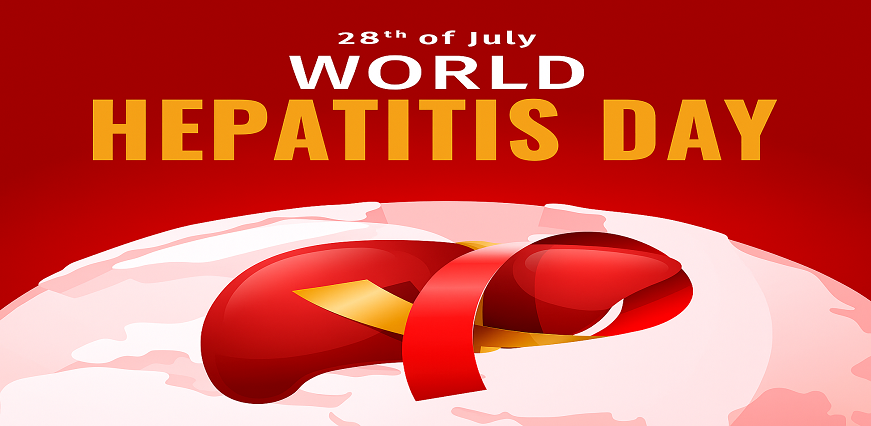
Every year, World Hepatitis Day shines a light on a global health issue that continues to impact millions: hepatitis. Despite being preventable and treatable, this group of liver infections still leads to over a million deaths worldwide each year. That’s more than HIV/AIDS or malaria yet awareness remains surprisingly low.
World Hepatitis Day is a chance to change that..
When is World Hepatitis Day Celebrated?
World Hepatitis Day is observed every year on July 28.
This date isn’t random it commemorates the birth anniversary of Dr. Baruch Blumberg, the Nobel Prize-winning scientist who discovered the hepatitis B virus and developed its vaccine. His work has saved millions of lives, and his legacy continues to inspire the fight against hepatitis.
World Hepatitis Day is one of just eleven official global health campaigns recognized by the World Health Organization (WHO), which means it gets global attention through public initiatives, awareness drives, and policy action.
Understanding Hepatitis and Why Awareness Matters
The term "hepatitis" refers to inflammation of the liver, most commonly caused by a viral infection. There are five main types: A, B, C, D, and E — each with its own cause, mode of transmission, and health risks.
While hepatitis A and E are typically spread through contaminated food or water, hepatitis B, C, and D are blood-borne and can lead to chronic liver disease, cirrhosis, and liver cancer if left untreated.
What’s most alarming? Over 300 million people are living with hepatitis worldwide — and most don’t know it. Many carry the virus silently for years without symptoms, only discovering it when serious liver damage has already occurred.
What About National Hepatitis Day in India?
While World Hepatitis Day is internationally observed on July 28, India also marks National Hepatitis Day to raise domestic awareness and strengthen public health responses.
In 2018, the Government of India launched the National Viral Hepatitis Control Program (NVHCP) , a nationwide initiative aimed at testing, treating, and eliminating hepatitis B and C.
Key components of the NVHCP include:
- Free screening services at government health centres
- Access to antiviral treatment
- Public education campaigns in multiple languages
- Vaccination drives, especially for newborns and high-risk groups
With the support of healthcare professionals, NGOs, and the public, the goal is to eliminate viral hepatitis as a public health threat by 2030.
Theme of World Hepatitis Day 2025: “Hepatitis: Let’s Break It Down”
This year’s official theme is:
“Hepatitis: Let’s Break It Down”
The message is clear — we need to break down the financial, social, and systemic barriers that prevent people from accessing care. That includes:
- Making testing and treatment affordable and accessible
- Fighting the stigma and shame often associated with a hepatitis diagnosis
- Encouraging governments and healthcare systems to invest in long-term solutions
- Simplifying complex medical information so that it’s easy for everyone to understand
In essence, the theme is a call to action: No one should suffer from hepatitis just because they didn’t know.
How is World Hepatitis Day Observed?
Across the world and right here in India World Hepatitis Day activities aim to engage the public and bring hepatitis into everyday conversation.
Here are some ways communities and organisations are participating:
- Free hepatitis B and C screening camps at hospitals and health centres
- Vaccination drives, particularly in high-risk communities
- Educational sessions and webinars for students, teachers, and healthcare workers
- Street plays, posters, and rallies to reach people at the grassroots level
- Social media campaigns using hashtags like #WorldHepatitisDay and #HepCantWait
- Landmarks illuminated in yellow, the campaign’s signature color
These efforts not only encourage people to get tested, but also help normalize conversations around liver health and remove the fear that often surrounds these infections.
Who Should Get Tested for Hepatitis?
Hepatitis doesn’t always cause symptoms in its early stages, which makes testing all the more important. The good news? A simple blood test can detect most forms of viral hepatitis.
You should consider getting tested if:
- You’ve had unprotected sex
- You’ve shared needles, razors, or even toothbrushes
- You were born to a hepatitis B or C positive mother
- You received blood transfusions before 1992
- You have a history of liver problems, or family members with hepatitis
Early diagnosis can lead to timely treatment and in many cases, a full recovery or long-term disease management.
Conclusion
Hepatitis might be a global challenge, but the solution starts at an individual level. If you’ve never been tested, or if you’re unsure about your risk, now is the time to act. Talk to a doctor, get tested, and encourage others to do the same.
Let’s break the silence, break the stigma — and break hepatitis down, once and for all.

















 To reach our help desk call 7982100200
.png)