








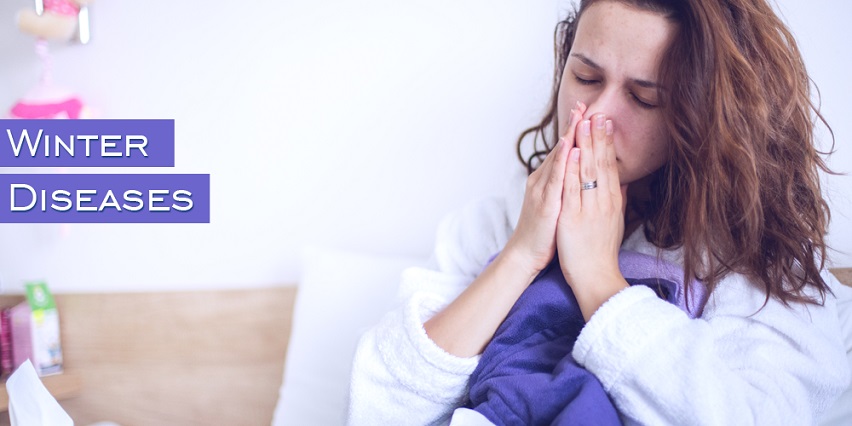
Along with cooler weather, the winter months bring with them so many illnesses that can target the whole family. Winter can be a tough time for kids as well as adults to stay healthy. Learning about the types of common winter diseases can make it easier for you to take care of yourself as well as your child when they are sick. With winters just around the corner, it is also important that we don’t forget the unpleasant side of the season, such as the dip in temperature and other related factors that can cause abundant health problems, also called winter diseases or seasonal diseases. Let’s have a look at some of the most common seasonal diseases in winter and their symptoms, prevention, and tips for treatment for the list of winter illnesses: -
-
Common Cold
A cold is among the most common winter weather illness. The omnipresent “cold” is a seasonal affective disease that peaks during the winter months. The common cold is a respiratory illness characterised by a stuffy and runny nose, a sore throat, and a mild to severe cough. Although common colds can be infuriating, one can still continue with their usual day-to-day activities and the cold will abate in two to four days. In case it stays for a longer period than that, one would then require medical help.
Common symptoms of this winter sickness usually show up within one to three days of being prone to the rhinovirus. Some of the symptoms of this disease in the winter season include runny nose, congestion, sore throat, cough, sneezing, mild headache and body pain, malaise and low-grade fever. Over-the-counter medications suggested by a medical practitioner and nasal sprays can help ease symptoms.
-
Pneumonia
Pneumonia is as
-
Whooping Cough
Also known as pertussis, whooping cough is a serious and highly contagious bacterial infection that largely affects infants and young children. Whooping cough is amongst the common cold weather diseases. A bacterium called Bordetella pertussis, which is spread by coughing, sneezing and even breathing, is the main source of whooping cough. This starts like common cold and progresses to coughing chokes that end with a whooping sound as you breathe. Other signs of this include fever, sneezing, runny nose and watery eyes. To treat this seasonal affective disease, the doctor may prescribe antibiotics that can provide early relief and reduce chances of contagion and advise drinking plenty of fluids and staying away from irritants like smoke or dust.
-
Norovirus
The norovirus is an infectious illness that can happen to people of all ages and no matter what time of the year. However, it is a more common sickness in the winter. The virus causes diarrhea and vomiting and is hence known as the winter vomiting bug. The common symptoms of norovirus infection include nausea, vomiting, diarrhea, stomach pain, fever and chills. There are no vaccines to prevent such common illnesses in winter, however, it can be prevented by following proper hand and oral hygiene. Also, be sure to clean and disinfect high touch zones more often.
-
Strep Throat
Strep throat, caused by “group A Streptococcus bacteria”, is a serious infection occurring in the throat and tonsils. It is a common illness which is caused by cold weather, mostly in children within the age group between five to fifteen years. Winter care especially for the kids is crucial to prevent this infection. Sharp pain in the throat is an evident symptom that someone with strep throat will encounter. Other signs of strep throat include fever, headache, nausea, swollen lymph nodes and vomiting. To treat this common disease in the winter season and feel better, you can gargle with lukewarm saline water, keep suckling on a lozenge, and replace your toothbrush.
Bonus: Seasonal Affective Disorder
Probably the most common disease in winter season is seasonal affective disorder, also known as SAD. A part of the list of winter illnesses that are most common, SAD is a depression the occurs specifically during fall and winters.
Stopping the Spread of Common Diseases in the Winter and Their Prevention
If you or someone in your family is sick with winter season diseases, you can stop the spread by following these effective tips:
- Wash your hands regularly with soap and warm water for at least 20 seconds, especially before meals and after returning home from public places. Use hand sanitiser when soap and water are unavailable.
- Clean and disinfect high-touch surfaces, such as countertops, doorknobs, and remotes, regularly to eliminate germs.
- Cover your mouth and nose with a tissue or elbow when coughing or sneezing.
- Avoid sharing your cups, food, utensils, toothbrushes, clothing, towels, or other personal items.
- Wear a mask in public and consider using one at home when around family members, especially to protect those who are immunocompromised.
- Stay home until your symptoms improve and you are no longer contagious.
When to See a Doctor about Winter Season Diseases
When dealing with seasonal affective disease, knowing when to seek medical attention is crucial. Here are key indicators for when to see a doctor:
- A high fever exceeding 102°F (38.9°C) in adults that persists for more than four days needs medical attention.
- In the case of infants, any fever in infants under 3 months old, or a fever ranging from 99°F (37.2°C) to 100.4°F (38°C) in children older than 3 months, should be evaluated by a healthcare provider.
- Seek help for seasonal diseases in winter if experiencing difficulty breathing, wheezing, or chest pain.
- Extreme fatigue or lethargy that interferes with daily activities.
- Look for symptoms such as dark-coloured urine, confusion, dizziness, or a sunken soft spot (fontanelle) in infants, as these may indicate dehydration and require prompt medical care.
Reducing the risk of these common diseases in the winter season starts with washing hands frequently. Remember to keep this list of recurrent winter illnesses in mind and take preventive measures. Following healthy habits and safety practices will help you to lower the chances of getting sick from the diseases caused by cold weather so that you enjoy a healthy, happy and sickness-free winter season.

















 To reach our help desk call 7982100200
.png)