








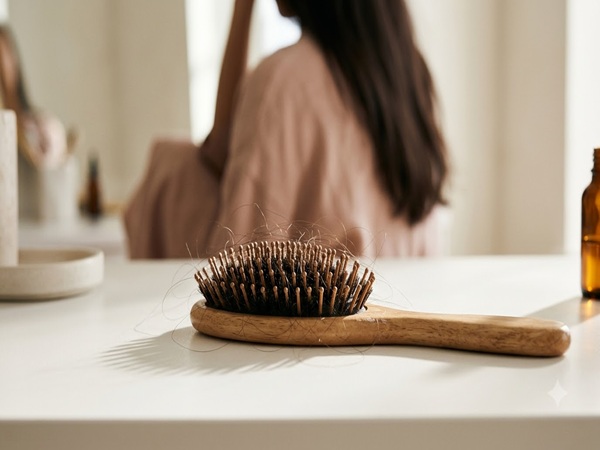

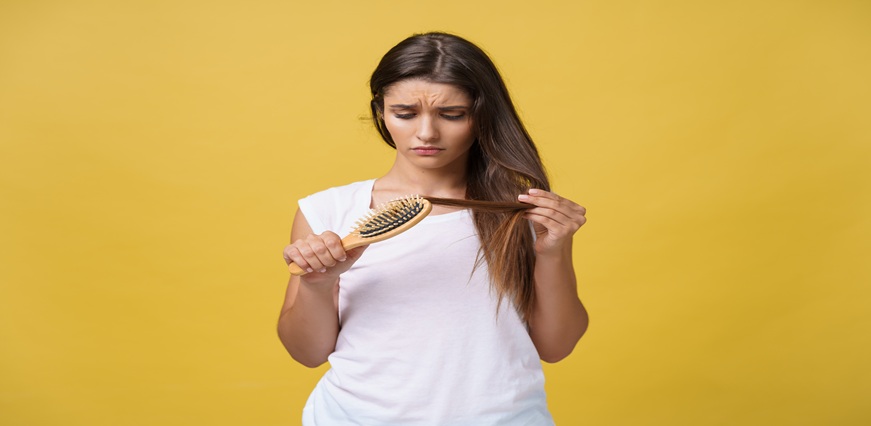
Losing some hair every day is a normal part of the growth cycle. Most people shed somewhere between 50 and 100 strands a day, and new hairs grow in to replace them. The concern starts when that balance tips, and noticeably more hair falls out than grows back. Hair loss in women often shows up differently from the receding hairline typical in men, more often as overall thinning, a widening parting, or a ponytail that feels thinner than it used to.
Understanding the common signs of hair fall in women, and the hormonal and reproductive reasons behind it, makes it easier to spot the pattern early and get the right help.
What Causes Hair Fall in Women?
Common causes include:
-
Scalp infections or inflammation
-
Sudden changes in eating habits, such as a crash diet
-
Stress
-
Chemical hair treatments
-
Medical treatments like chemotherapy or radiation therapy
-
An underlying health condition, such as a thyroid disorder, anaemia or a vitamin deficiency
-
Hormonal changes, such as pregnancy, childbirth or menopause
-
Certain medications and supplements
-
Genetics
What Are the Common Types of Hair Loss in Women?
Hair grows in a repeating cycle: an active growth phase (anagen, lasting up to several years), a short transitional phase (catagen), and a resting phase (telogen) after which the hair is eventually shed. At any time, most hairs are in the growth phase, so hair loss usually means something has disrupted that balance. Three types of hair loss that commonly affect women include:
-
Androgenetic alopecia: also known as female pattern hair loss, this is the most common type of hair loss in women. It is a hereditary condition in which hair gradually thins over the top of the scalp and at the parting, making the parting look wider over time.
-
Anagen effluvium: this type of hair loss is often a result of a medication or treatment, such as chemotherapy, that compromises a growing hair follicle.
-
Telogen effluvium: this happens when a larger-than-usual number of hair follicles shift into the resting phase at the same time, often a couple of months after a triggering event such as a high fever, major surgery, childbirth or significant stress. It usually settles on its own within a few months once the trigger has passed, though recovery of full density can take longer, and it can become longer-lasting if the underlying cause isn't addressed.
These three are not the only causes of hair loss. Patchy loss (alopecia areata), scarring forms of alopecia, and traction alopecia from tight hairstyles are less common but important to recognise, since some of them need prompt attention to avoid permanent damage.
What Are the Signs of Hair Loss in Women?
Common signs of hair loss in women may include:
-
Increased hair fall on a daily basis
-
Noticeable patches of thinner or missing hair
-
The scalp becoming visible through the hair
-
Hair breaking off rather than shedding from the root
-
A ponytail that feels thinner than before
-
A wider parting line
-
Reduced volume around the temples or on the crown
What Is Hormonal Hair Loss in Women?
Hair follicles are sensitive to shifts in certain hormones, including androgens, oestrogen and thyroid hormones. Minor hormonal fluctuations are normal, but a bigger shift can disrupt the hair growth cycle and lead to noticeable shedding.
Pregnancy and the Postpartum Period
During pregnancy, higher oestrogen levels keep more hair in the growth phase for longer than usual. After childbirth, oestrogen falls sharply, pushing a large number of those hairs into the resting phase together, which shows up as noticeable shedding a few months later. This postpartum shedding commonly begins around three months after delivery, usually lasts less than six months, and hair fullness generally returns by the time the baby turns one.
Menopause
Female pattern hair loss also becomes more common around and after menopause, as oestrogen levels fall and the relative effect of androgens increases. Age and inherited susceptibility play a part too, so not every case in this age group reflects a hormonal problem that can be corrected.
PCOS
Polycystic ovary syndrome (PCOS) often involves higher androgen levels, and in sensitive hair follicles this can gradually shorten the growth phase, leading to thinner, finer hair, usually at the crown and front of the scalp. That said, hair loss alone, with otherwise normal hormone levels, shouldn't automatically be read as a sign of PCOS. Doctors generally still check for androgen excess in anyone with this pattern of hair loss, since it can point to PCOS or a related condition.
How to Stop Hair Fall Immediately?
Many people search for ways to stop hair fall at home immediately. However, hair regrowth takes time, even once the underlying cause has been treated, and there is no proven way to stop hair fall immediately. What helps is identifying the cause behind it and treating that early.
Here are a few steps that can help while the underlying cause is being looked into:
-
Avoid any hair treatment that uses harsh chemicals
-
Minimise heat styling
-
Switch to hairstyles that put less strain on the roots
-
Use a gentle shampoo suited to your scalp and avoid scrubbing too hard
-
Handle wet hair carefully, as it is more fragile
When Should Women See a Doctor for Hair Loss?
It is worth arranging an assessment, preferably with a dermatologist, if shedding persists, thinning keeps progressing, or hair loss is affecting you emotionally. Some signs call for a prompt visit rather than a wait-and-watch approach:
-
Sudden or rapid shedding, or patchy/bald areas
-
Scalp pain, burning, redness, marked scaling or pustules
-
A smooth, shiny bald patch, or loss that looks like it might be scarring, since this type of hair loss can become permanent the longer it goes untreated
-
Hair loss alongside irregular periods, new facial hair or acne, heavy menstrual bleeding, fatigue or unexplained weight change, which may point to PCOS, thyroid disease or anaemia
-
Postpartum shedding that hasn't started settling by around six months, or hair fullness that still hasn't recovered by your baby's first birthday
-
Hair loss that starts soon after beginning a new medicine
Seeing a doctor early, rather than waiting, gives the best chance of slowing or reversing hair loss where that is possible, and of catching the less common causes that need specific treatment.
What Are the Treatments for Hair Loss in Females?
Treatment for hair loss in women varies depending on the underlying cause, which is why a proper consultation with a doctor is usually the first step.
-
Minoxidil: for female pattern hair loss, topical minoxidil is the most widely used, evidence-based first-line treatment. A dermatologist can confirm whether it suits you and advise on the strength to use. Results take several months to show, it needs to be continued to maintain the benefit, and a temporary increase in shedding or some scalp irritation can occur when starting it. It should be avoided during pregnancy, while trying to conceive, or while breastfeeding.
-
Other medication or supplements: depending on the cause, a doctor may suggest other oral or topical medication, and if a specific deficiency is behind the hair loss, targeted vitamins or supplements, rather than a general multivitamin.
-
Managing the underlying cause: addressing stress, a thyroid condition, PCOS or any other underlying health condition is usually part of the plan as well.
For some women with female pattern hair loss, a dermatologist may also discuss microneedling of the scalp or platelet-rich plasma (PRP) injections as additional options. The evidence for these is promising but less established than for minoxidil, and results vary from person to person, so they are usually considered alongside, rather than instead of, first-line treatment.
It is always best to consult a doctor before starting any hair loss treatment, and not to stop a prescribed medicine on your own without checking first. Some treatments are not safe during pregnancy, while trying to conceive, or while breastfeeding.
How to Prevent Hair Fall and Further Hair Loss?
Not every type of hair loss can be prevented, but certain habits may help protect the hair you have, such as:
-
Choosing gentle hair care products
-
Limiting heat styling and chemical treatments
-
Avoiding tight buns, braids or ponytails, especially pulled tight at the hairline, and giving the hair regular breaks from them.
-
Eating a balanced, nutrient-rich diet
-
Managing stress through exercise and rest
-
Treating any nutritional deficiency or hormonal imbalance early
-
Taking supplements only when advised by a doctor
Recognising and Managing Hair Fall in Women
Hair fall in women can stem from several factors, and the right approach usually starts with identifying the reason behind it. Some types of hair loss settle on their own, while a few, including longstanding untreated traction alopecia and some scarring conditions, can permanently damage hair follicles if left unaddressed. Once the cause is correctly identified, treatment can reduce shedding, slow progression, or help hair grow back, depending on what is driving it.













 To reach our help desk call 7982100200
.png)