









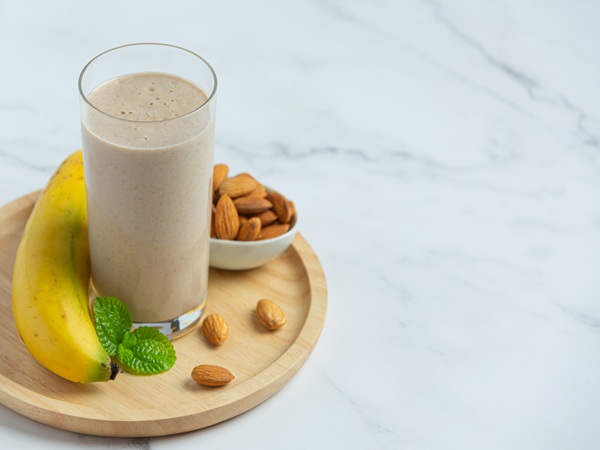

You don't need a tub of protein powder to make a high-protein shake. Milk, Greek yoghurt, soy drink and tofu can do the job, and the four protein shake recipes below give roughly 15 to 27 g of protein each from everyday ingredients.
Making a shake yourself also means you decide how sweet it is and how big the glass is. But homemade doesn't mean right for everyone. If you have diabetes, kidney disease or a food allergy, or you're pregnant, a few ingredients need a second look, and that's covered further down.
How Much Protein Is in Each Shake?
This is what each recipe gives you in total: protein, calories and carbohydrate, worked out from standard food-composition figures for the measured ingredients.
|
Shake |
Protein |
Calories |
Carbohydrate |
Main protein sources |
|
High-protein banana shake |
About 23 g |
About 265 kcal |
About 39 g |
Milk and Greek yoghurt |
|
Peanut butter protein shake |
About 26 g |
About 310 kcal |
About 31 g |
Milk, Greek yoghurt and peanut butter |
|
Oats and milk protein shake |
About 27 g |
About 335 kcal |
About 48 g |
Milk, Greek yoghurt and oats |
|
Dairy-free chocolate protein shake |
About 15 g |
About 205 kcal |
About 22 g |
Soy drink and tofu |
Treat these as estimates. They assume low-fat milk, such as double-toned milk, and fat-free Greek yoghurt. Full-fat yoghurt adds roughly 55 kcal to a glass. Brands differ, and Greek yoghurt and tofu differ most of all, so check the protein per 100 g on your own pack. If you need exact figures for a diet plan, work them out from the labels of the products you actually use. Regular curd usually has only about half the protein of Greek yoghurt, weight for weight, so a shake made with ordinary dahi will come out lower.
How Much Protein Do You Need in a Day?
For a healthy adult, the recommended intake in India is about 0.83 g of protein per kg of body weight a day. For vegetarians and others whose diet is mostly cereals, the figure is about 1 g per kg, because cereal protein is of lower quality. A vegetarian diet with plenty of milk, curd, pulses and soy closes most of that gap. That's roughly 50 to 60 g for someone who weighs 60 kg, so one of these shakes covers about a quarter to a half of the day's need. Your own figure also depends on your age, how active you are, pregnancy and any illness. Most of your protein should still come from ordinary meals, such as dal, curd, milk, eggs, paneer, pulses and nuts. India's national dietary guidelines advise getting protein from food and not relying on protein powders to build muscle, which is one more reason to make a shake from food.
Patients often ask whether more protein is always better. It isn't. More protein doesn't build more muscle by itself. Your training and the rest of your diet matter just as much.
Easy Homemade Protein Shake Recipes
Each recipe makes one large glass, and the figures above are for the whole recipe. Use pasteurised milk and curd, and read the labels of packaged ingredients for allergens. If you don't keep Greek yoghurt at home, thick hung curd is the closest swap, and the FAQs below explain how to make it.
High-Protein Banana Shake
-
200 ml low-fat milk
-
150 g plain fat-free Greek yoghurt
-
1 ripe banana, about 100 g peeled
-
A pinch of cinnamon or cardamom
Slice the banana and blend it with the milk, yoghurt and spice until smooth. For a thicker shake, freeze the banana slices first. The banana makes it sweet enough, so you don't need honey or sugar.
If milk upsets your stomach, use lactose-free milk and lactose-free yoghurt. Changing only the milk still leaves the lactose in ordinary yoghurt, though many people with lactose intolerance find yoghurt easier to handle than milk.
Peanut Butter Protein Shake
-
200 ml low-fat milk
-
150 g plain fat-free Greek yoghurt
-
15 g unsweetened peanut butter, about 1 level tablespoon
-
Half a banana, about 50 g peeled
Blend the milk and yoghurt first, then add the banana and peanut butter and blend again. Measure the peanut butter. A heaped spoon can easily be double the amount, and peanut butter packs a lot of calories into a small spoonful.
This shake contains milk and peanuts. If you have a peanut allergy, pick another recipe, and don't assume a different nut butter is safe for you.
Oats and Milk Protein Shake
-
200 ml low-fat milk
-
150 g plain fat-free Greek yoghurt
-
30 g rolled oats, weighed dry
-
150 ml water
-
Half a banana, about 50 g peeled
Cook the oats in the water until soft and let them cool. Then blend them with the milk, yoghurt and banana. Oats make this the thickest and most filling of the four, and they bring some fibre with them.
If you have coeliac disease, use only oats labelled gluten-free, and check with your doctor or dietitian whether oats suit you. Ordinary oats often pick up wheat during processing. A wheat allergy is a different condition, so read the full allergen label and don't rely on a gluten-free claim alone.
Dairy-Free Chocolate Protein Shake
-
200 ml unsweetened fortified soy drink
-
150 g soft silken tofu, drained
-
Half a banana, about 50 g peeled
-
5 g unsweetened cocoa powder
Stir the cocoa into a little of the soy drink to make a paste, then blend it with everything else until smooth.
Fortified soy drink is the plant-based drink closest to milk in its nutrients. Tofu varies a lot from brand to brand, so check the protein on the pack. Almond and oat drinks often have far less protein, so if you swap, check the label and expect a lower number.
This shake contains soy. If you have a milk allergy, check every ingredient for milk. Lactose-free milk is not a safe swap for a milk allergy, because it still contains milk protein.
Who Should Check with a Doctor First?
For most healthy adults these shakes are just food. A few conditions change what should go in the glass.
|
Condition |
What to check |
|
Diabetes |
Count all the carbohydrate in the shake, from the fruit, milk, yoghurt and oats, as part of your meal. The table above gives a figure for each recipe. No added sugar doesn't mean no carbohydrate. If you take insulin or tablets that can cause low sugar, timing matters too. |
|
Kidney disease |
Protein, potassium, phosphorus and fluid may all be limited, and milk, yoghurt, banana, nuts and soy all add to them. If you're on dialysis you may actually need extra protein, so follow your own kidney team's advice before adding a shake. |
|
Pregnancy |
Use pasteurised milk and curd and wash fruit well [9]. Protein needs go up in pregnancy, so a shake can help, but have it as a snack or as part of a meal, not in place of meals. |
|
Food allergy or coeliac disease |
Check every label, every time. The recipes above flag milk, peanuts, soy and oats. |
If you plan to raise your protein intake and you have diabetes, high blood pressure or a family history of kidney disease, ask your doctor whether a kidney function test is worth doing first.
Do Protein Shakes Help with Weight Loss or Muscle Gain?
No shake burns fat. Weight comes down when you eat fewer calories than you use. A shake can help if it replaces a heavier snack or part of a meal, but drinking one on top of your usual food just adds calories. None of these shakes is a complete meal by itself, so the rest of the day's food still needs to cover fibre, vegetables and the other nutrients. Relying on shakes for most meals isn't a good idea either, because you miss out on a varied diet.
For muscle, the training does the work and protein supports it. People who train to build or keep muscle need more than the basic amount, around 1.4 to 2 g per kg of body weight a day, spread across meals. That range is for people in regular training. It isn't a target for every adult. A shake after a workout is one convenient way to get some of that.
A protein shake for breakfast is fine too, especially if your usual breakfast is something light on protein like poha, upma or toast. Count it as part of the meal, not as an extra.
How to Make and Store a Shake Safely
-
Wash your hands, the blender jar and the lid before you start, and rinse fruit under running water before peeling it.
-
Drink the shake soon after making it. If you're saving it for later, cover it and keep it in the fridge at 4°C or below.
-
Throw away a shake that has sat out for more than two hours. In hot weather, above about 32°C, make that one hour.
In the Indian summer heat that one-hour limit comes up fast, so don't leave a shake in your bag or on your desk for later. It can be unsafe before it smells or tastes off.
Which Shake Should You Choose?
Pick the recipe that fits what you can eat, measure the ingredients and count the shake as part of your day's food. If you have a health condition, your doctor or dietitian can tell you how much protein is right for you, and Max Lab can help with any blood tests they ask for.














 To reach our help desk call 7982100200
.png)