









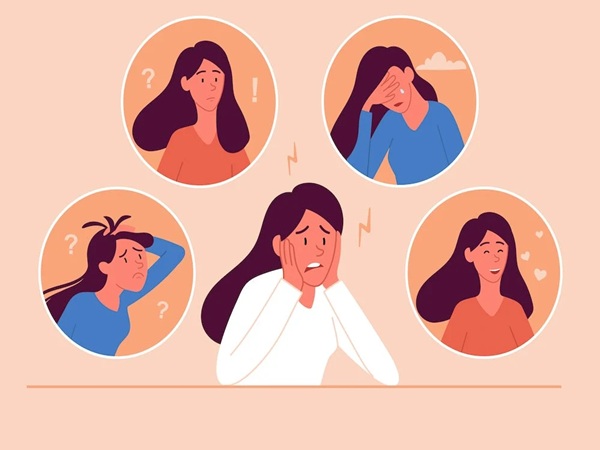

In the days leading up to a period, even an ordinary task can feel like more effort than usual. Some people snap more easily, feel tearful or restless, or struggle to concentrate. Cramps, tiredness and poor sleep can add to it. When the same pattern repeats month after month, it can start to affect work, relationships and rest.
Mood swings during periods are usually talked about as part of premenstrual syndrome (PMS), even though they tend to begin before bleeding does. Keeping a record of symptoms across a cycle, not just the difficult days, makes it easier to see whether everyday changes are enough or whether treatment is worth discussing with a doctor.
What Causes Mood Swings During Periods?
The exact cause of premenstrual mood symptoms is still not fully understood. Research has not settled on a single mechanism, and current thinking focuses on how the brain responds to normal hormone changes, alongside other factors that can make emotional symptoms worse.
Normal Hormone Changes and Individual Sensitivity
Once an ovary releases an egg, progesterone rises and oestrogen keeps shifting. If pregnancy does not happen, both hormones fall again before the next period. These hormones also interact with brain chemicals such as serotonin, which plays a part in regulating mood.
Many people with premenstrual symptoms have hormone levels that are within the expected range. The difference seems to be in how sensitive a person is to these monthly shifts, rather than the hormone levels themselves being abnormal.
Stress, Sleep and Existing Mood Conditions
Poor sleep can make irritability worse, and stress, cramps and tiredness add to the strain. An existing anxiety disorder or depression can also become harder to manage in the days before a period.
When low mood is present through most of the month but gets worse before a period, this is usually described as premenstrual exacerbation of an existing condition, not PMDD on its own. The distinction matters for treatment, since it then needs to cover the underlying condition as well, not just the premenstrual days.
What Are the Symptoms of Period Mood Swings?
Menstrual cycle mood changes are emotional symptoms that return at a similar point in the cycle, month after month. The symptoms of period mood swings can include:
-
Being short-tempered or getting into arguments more often.
-
Crying easily or feeling more sensitive than usual.
-
Feeling anxious, sad or overwhelmed.
-
Finding it hard to focus on familiar tasks.
Bloating, breast tenderness, food cravings and tiredness often appear alongside these symptoms, and the exact mix can differ from one cycle to the next. With PMS, these changes tend to show up in the week or two before a period and usually ease within a few days of bleeding starting. A doctor will want to know whether there are calmer days between periods, especially if depression or anxiety is also part of the picture.
How Common Is This Among Indian Women?
Indian college-student surveys show just how much results can vary depending on the questionnaire and definition used. A survey of 300 students in Puducherry found a high 62.7 percent screened positive for PMS. The same study also screened for PMDD, but its own authors flagged that particular figure as a likely overestimate from using a symptom checklist as a screening tool rather than a confirmed diagnosis. A separate study of 318 college students in Kerala, using a stricter approach, found moderate-to-severe PMS in about 28 percent, and about 14 percent screened positive for PMDD. These are small, single-campus, self-reported samples that cannot be read as one national figure, but together they suggest premenstrual mood symptoms are common among Indian women and worth tracking rather than dismissing as something everyone just has to live with.
How to Control Mood Swings During Periods?
Getting started only takes a notebook or a calendar. Mark the days of bleeding and jot down a quick daily note on mood, sleep and anything that felt harder than usual. Note the better days too, when symptoms ease or go away. Records from at least two cycles give a doctor a clearer picture of what has been going on.
A simple diary can be as short as this, for example:
|
Day of cycle |
Mood / symptoms |
Severity (0 to 4) |
Effect on daily life |
|
Day 19 |
Irritable, snapping easily |
2 |
More impatient than usual |
|
Day 24 |
Anxious, tearful, poor focus |
4 |
Struggled to concentrate at work |
|
Day 2 of bleeding |
Improving |
1 |
Managing normal activities |
|
Day 8 |
No symptoms |
0 |
Usual mood and functioning |
This is just an illustrative example, not a diagnostic record, but a few weeks of notes like this give a doctor far more to work with than a description of how one difficult day felt.
A few everyday habits may also help with menstrual cycle mood changes:
-
Sleep: going to bed and getting up at about the same time each day helps. If sleep is disturbed, cutting down on caffeine later in the day may make a difference.
-
Activity: regular walking, swimming or cycling may help with low mood, tiredness and poor concentration.
-
Meals: regular meals built around whole grains, vegetables, fruit and protein-rich foods are a good base. If caffeine makes anxiety worse, it is worth reducing, while sticking to any dietary restrictions already prescribed.
-
Stress: yoga, relaxation exercises or talking things through with someone trusted can help when things feel hard.
These steps can take the edge off some menstrual cycle mood changes, but they should not be a reason to put off seeing a doctor when symptoms are getting in the way of daily life, and there is no need to try everyday habits first if symptoms are already severe.
What Treatments Are Available for Period Mood Swings?
There is no single treatment for period-related mood swings that works for everyone. The right option depends on what is going on and how much it disrupts everyday life, and a doctor will also take into account any current medicines, medical history and plans for pregnancy.
-
Cognitive behavioural therapy (CBT): this therapy helps people work through upsetting thoughts and emotional reactions around the premenstrual pattern, building practical coping skills that can be used whenever symptoms come back. It can be used on its own or alongside medicines.
-
Selective serotonin reuptake inhibitors (SSRIs): SSRIs can help with the mood symptoms of PMDD and often start working within days rather than the few weeks usually needed for depression, which is part of why some people only need to take them in the second half of the cycle. The choice between taking one every day or only in the days before a period depends on symptom pattern, response, side effects, and whether depression or anxiety also needs treatment through the rest of the month. Taking it daily may provide somewhat greater symptom relief on average, but both approaches are considered effective, and the schedule should be followed as agreed with the doctor rather than changed on your own.
-
Combined contraceptive pills: some combined pills, particularly ones containing the progestin drospirenone, have been studied for premenstrual symptoms and can help with overall symptoms and day-to-day functioning, though the effect on mood specifically is less certain, and the formulation and pill-free interval can matter. These pills are not suitable for everyone, so a doctor will weigh medical history and other risks before prescribing one, and mood should still be checked after starting it, since some people notice it getting worse instead.
Painkillers can help with cramps or headaches, but they do not treat mood symptoms as such. Supplements should also be discussed with a doctor or pharmacist first, since the evidence behind them varies and some can interact with medicines.
When Is It Time to See a Doctor About Period Mood Changes?
How urgently to act depends on what is happening. It helps to think of this in three levels.
Worth booking a routine appointment for: frequent arguments, time off work, or finding it hard to cope at home because of mood swings. The same goes for symptoms that carry on after the period ends, or that stay troublesome even after changes to sleep and daily routine.
When Could Mood Changes Indicate PMDD?
A medical evaluation is worth arranging when symptoms suggest premenstrual dysphoric disorder (PMDD), a more severe pattern that seriously disrupts daily life. A diagnosis needs at least five symptoms from a recognised list, with at least one being a key mood symptom such as marked mood swings, irritability, depressed mood or anxiety. The pattern must occur in most cycles over the past year, in the final week before a period, and cause real distress or get in the way of work, school or relationships, not just feel unpleasant. Severity on its own cannot tell severe PMS apart from PMDD, which is why clinicians rely on daily symptom ratings kept over at least two cycles rather than a one-off description, and also check that another condition, medicine or substance is not a better explanation. Symptoms typically start easing within a few days of bleeding starting and become minimal or disappear in the week after. You do not need to finish two cycles of tracking before booking an appointment. A doctor can begin assessing straight away and use the diary to confirm the pattern as it comes in. No blood test can confirm PMS or PMDD, though tests such as thyroid function may still be requested if the history points to another possible cause.
A true emergency, with no need to wait for any of the above: if you are having thoughts of self-harm or suicide, or feel unable to keep yourself safe right now, get help immediately rather than waiting to see if it passes. Call 112, India's national emergency number, or go to the nearest emergency department. Tele-MANAS (14416, or 1800-891-4416), India's free, 24-hour government mental health helpline, can also help straight away, but it is support, not a replacement for emergency care when you are in immediate danger. If you can, let someone you trust know what is happening so they can stay with you.
Recognising Period Mood Changes and Seeking Timely Care
Emotional wellbeing is part of menstrual health. Regular sleep, physical activity and the right treatment, when it is needed, all help in managing period-related mood changes. Keeping track of what happens before, during and after a period gives a doctor useful information to assess PMS, PMDD or another condition, and to decide on the right treatment.
















 To reach our help desk call 7982100200
.png)