






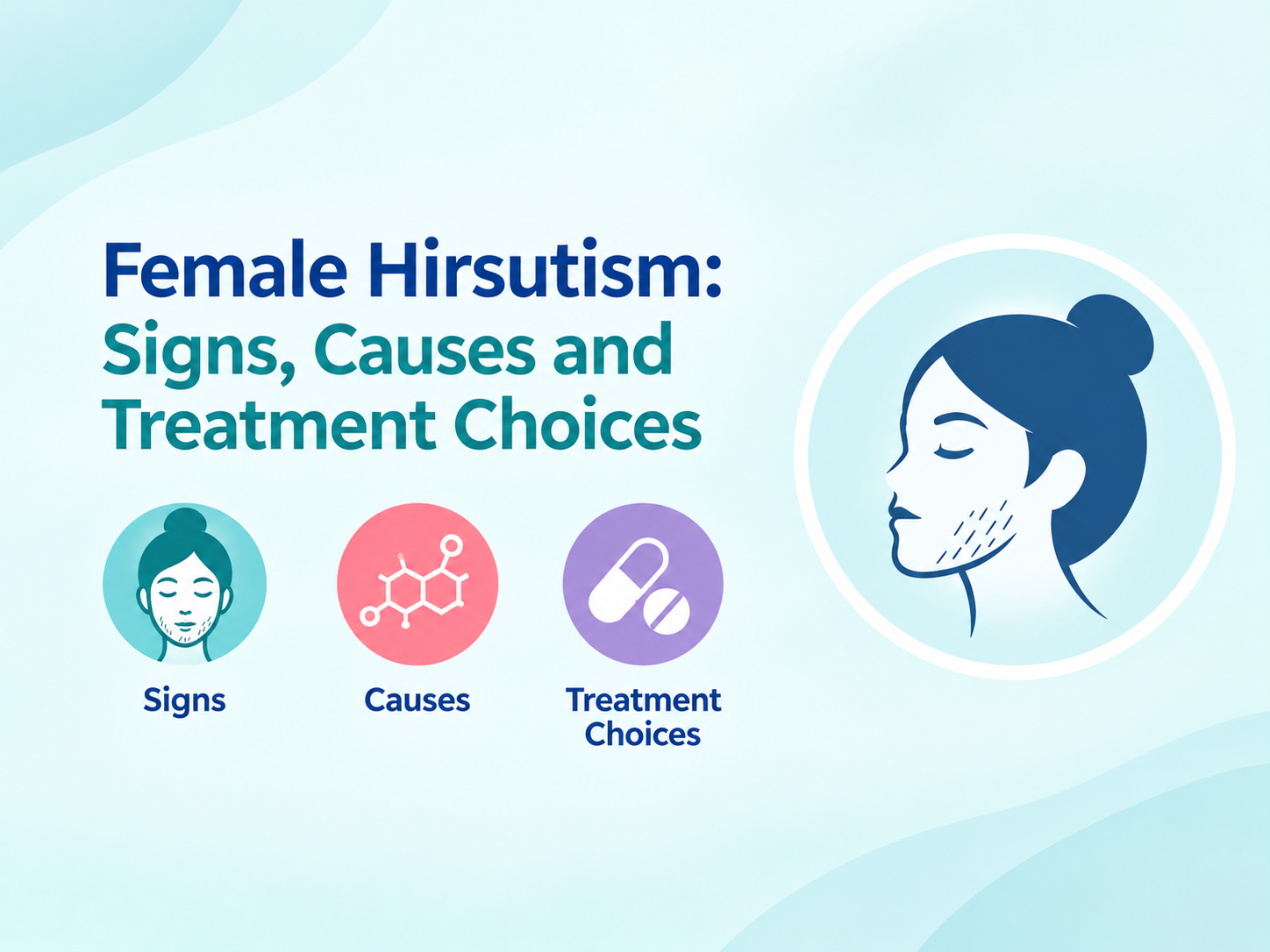
Excess facial or body hair can be frustrating and may affect a woman’s confidence. When women develop excessive, coarse hair in areas where men typically grow hair, such as the face, chest, abdomen, or back, it may be a condition called female hirsutism.
Hirsutism can have several causes, including hormonal changes and certain medical conditions. In some cases, it may be related to conditions such as polycystic ovary syndrome (PCOS). Understanding the hirsutism meaning, possible causes, and available treatment options can help you decide when to seek medical advice.
What Is Hirsutism?
Hirsutism is excessive growth of coarse, dark hair in women in a male-pattern distribution. It commonly affects areas such as:
-
Upper lip and chin
-
Chest
-
Abdomen
-
Back
-
Arms and legs
The amount and distribution of body hair naturally vary between women, so having more body hair does not always mean that someone has hirsutism.
Hirsutism is usually related to increased levels or effects of male hormones called androgens. However, some women can develop unwanted facial or body hair even when their hormone levels are normal.
Hirsutism Meaning: What Does It Indicate?
The hirsutism meaning is essentially excessive terminal hair growth in women in areas that are more commonly associated with male-pattern hair growth.
It is different from simply having naturally thick or dark body hair. Hirsutism usually refers to the growth of coarse hair in areas such as the chin, upper lip, chest, or abdomen.
Hirsutism itself is not always a serious health problem, but new or rapidly increasing hair growth can sometimes be a sign of an underlying hormonal condition. A healthcare professional can help determine whether further evaluation is needed.
What Is the Cause of Hirsutism?
There are several possible causes of hirsutism. The cause of hirsutism may be related to hormones, genetics, medications, or an underlying medical condition.
Common causes include:
1. Polycystic Ovary Syndrome (PCOS)
PCOS is one of the common conditions associated with hirsutism. It can cause increased androgen activity and may also be associated with irregular periods, acne, weight changes, or difficulty becoming pregnant.
2. Hormonal Changes
Higher levels of androgens or increased sensitivity to these hormones can contribute to excessive hair growth.
3. Genetics
Some women naturally have more facial or body hair because of their family history or genetic background.
4. Certain Medications
Some medicines can contribute to unwanted hair growth. If you notice increased hair growth after starting a medication, speak with your healthcare professional rather than stopping the medicine on your own.
5. Other Hormonal Conditions
Less commonly, hirsutism may be associated with conditions affecting the adrenal glands, ovaries, or other parts of the endocrine system.
6. No Identifiable Cause
Sometimes, no specific underlying cause can be identified. This is often referred to as idiopathic hirsutism.
What Is the Reason for Facial Hair in Women?
The reason for facial hair in women can vary from person to person.
A small amount of facial hair is completely normal. However, if facial hair becomes darker, thicker, or increases noticeably, hormones may play a role.
Possible reasons include:
-
Increased androgen activity
-
PCOS
-
Family history
-
Certain medications
-
Other hormonal disorders
-
Increased sensitivity of hair follicles to androgens
Sudden or rapidly increasing facial hair, especially when accompanied by irregular periods, acne, scalp hair thinning, or a deeper voice, should be discussed with a healthcare professional.
Symptoms of Female Hirsutism
The main symptom of female hirsutism is the growth of coarse, dark hair in areas where women typically have less terminal hair.
Common areas include:
-
Chin
-
Upper lip
-
Jawline
-
Chest
-
Abdomen
-
Back
Some women may also experience other symptoms depending on the underlying cause. These can include irregular menstrual periods, acne, weight changes, scalp hair thinning, or difficulty becoming pregnant.
Having one or more of these symptoms does not necessarily mean you have a specific medical condition. A healthcare professional can evaluate your symptoms and medical history.
How Is Hirsutism Diagnosed?
A healthcare professional may begin by asking about your symptoms, menstrual cycle, medications, family history, and how quickly the hair growth developed.
Depending on your symptoms, they may recommend blood tests to check hormone levels.
Additional tests may sometimes be needed if there are signs of an underlying hormonal disorder.
The evaluation is particularly important when unwanted hair growth develops suddenly or progresses quickly.
Treatment for Hirsutism
The treatment for hirsutism depends on its cause, severity, symptoms, and your individual health needs.
Treatment may include a combination of medical treatment and cosmetic hair-removal methods.
1. Hair Removal Methods
Temporary methods include:
-
Shaving
-
Waxing
-
Threading
-
Plucking
-
Depilatory creams
These methods remove existing hair but do not treat the underlying hormonal cause.
2. Laser Hair Removal
Laser hair removal can reduce unwanted hair growth by targeting hair follicles. Multiple sessions are generally needed, and results can vary depending on hair and skin characteristics.
3. Electrolysis
Electrolysis uses electrical energy to target individual hair follicles. It can provide longer-lasting hair removal but usually requires multiple sessions.
4. Medicines
Certain prescription medicines can help reduce androgen-related hair growth. The choice of medication depends on the underlying cause and individual circumstances.
Because some medicines have important side effects and pregnancy-related considerations, they should only be used under medical supervision.
Birth Control Pills for Hirsutism
Birth control pills for hirsutism may be recommended for some women, particularly when excessive hair growth is associated with hormonal conditions such as PCOS.
Certain combined oral contraceptives can help regulate menstrual cycles and reduce androgen activity. Over time, this may help slow the growth of unwanted facial and body hair.
However, birth control pills are not appropriate for everyone. A healthcare professional should consider your medical history, other medications, risk factors, and pregnancy plans before recommending them.
Birth control pills also do not remove existing hair immediately. Hair growth typically takes time to respond to hormonal treatment, and cosmetic hair-removal methods may still be needed.
Can Hirsutism Be Treated Permanently?
There is no single treatment that permanently eliminates hirsutism for everyone.
Treating an underlying hormonal condition can help reduce new hair growth. Laser hair removal and electrolysis can provide longer-lasting hair reduction, while medications may help control hormone-related hair growth.
Because hair grows in cycles, treatment often takes several months before noticeable improvement occurs.
When Should You See a Doctor?
Consider speaking with a healthcare professional if:
-
Facial or body hair suddenly becomes thicker or darker
-
Hair growth is increasing quickly
-
You have irregular or absent periods
-
You have significant acne along with excess hair growth
-
You notice scalp hair thinning
-
You are having difficulty becoming pregnant
-
You develop other unusual changes such as a deeper voice
Sudden, rapid changes in hair growth may require evaluation for an underlying hormonal condition.
Conclusion
Female hirsutism is a common concern that can have different causes. Understanding the hirsutism meaning, identifying the possible cause of hirsutism, and knowing the available treatment for hirsutism can help you take the right next step.
While some facial and body hair is normal, sudden or excessive hair growth may be associated with hormonal changes or an underlying condition such as PCOS. Treatments can include cosmetic hair removal, laser therapy, electrolysis, and medicines. In some cases, birth control pills for hirsutism may be recommended as part of hormonal treatment.
If unwanted facial or body hair is new, increasing rapidly, or accompanied by other hormonal symptoms, consult a healthcare professional for an appropriate evaluation.










 To reach our help desk call 7982100200
.png)
Comments