








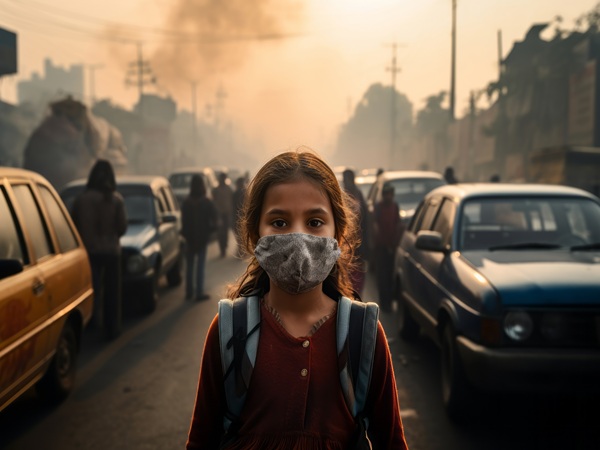

Every winter, Delhi’s air turns hazardous. Vehicle exhaust, dust, construction, burning waste and crop residue all add to it, and cold, still weather keeps these pollutants trapped close to the ground. The particles are linked to asthma, heart disease, stroke and lung cancer, and children and older adults face the greatest risk. Checking the AQI, cutting back on outdoor exertion on bad days and wearing a well-fitting N95 mask can all help limit exposure.
Smog can hang over Delhi for days at a time. The AQI often falls into the “severe” band, and even a short walk outside can leave the throat feeling raw. Breathing this air for weeks can increase the risk of respiratory infections, and years of exposure raise the long-term risk of heart disease and lung cancer. Knowing what drives the pollution and how to check it can help you plan around the worst days.
What Is the Current Air Pollution Level in Delhi?
The AQI reading Delhi residents see on their phones changes from hour to hour and from one neighbourhood to the next, since weather, traffic, industrial emissions and other local sources all affect it.
For up-to-date figures, the Central Pollution Control Board (CPCB) AQI portal is the most reliable place to look.[1] It pulls air quality data from monitoring stations across Delhi and the National Capital Region.
What Is the Air Quality Index (AQI) in New Delhi?
The air quality index in New Delhi is a number that shows how polluted the air is and what that may mean for health. India’s AQI draws on readings of several pollutants, including PM2.5, PM10, nitrogen dioxide, sulphur dioxide, carbon monoxide and ozone, and reports the worst of these on any day as a single score.
The AQI is divided into six categories:
|
AQI range |
Category |
General health implication |
|
0 to 50 |
Good |
Minimal health impact |
|
51 to 100 |
Satisfactory |
Minor discomfort may occur in sensitive individuals |
|
101 to 200 |
Moderately Polluted |
Breathing discomfort may affect sensitive groups |
|
201 to 300 |
Poor |
Prolonged exposure may cause breathing discomfort in many people |
|
301 to 400 |
Very Poor |
Respiratory problems become more likely with prolonged exposure |
|
401 to 500 |
Severe |
Health effects can occur even in healthy people, with greater risks for vulnerable groups |
Source: Central Pollution Control Board, India’s National Air Quality Index.The scale does not go higher than 500, even on days when pollution levels are worse than that.
What Are the Major Causes of Air Pollution in Delhi?
There is no single cause behind Delhi’s pollution. Reasons range from traffic and dust to smoke from fields, homes and festivals, and several contribute at once:
-
Vehicles: Cars, trucks and two-wheelers all add to the city’s pollution. How much they contribute depends on the pollutant, the location and the time of year.
-
Road dust: Dust kicked up by traffic from unpaved surfaces, poorly maintained roads and construction sites adds to PM10 levels right through the year, not just in winter.
-
Stubble burning: After the harvest, usually in October and November, farmers in neighbouring states such as Punjab and Haryana burn crop residue. The smoke drifts towards Delhi and adds fine particles (PM2.5) to the air.
-
Household fuel and open waste burning: Burning wood or other biomass for heating and cooking, and burning garbage in the open, both add smoke and fine particles, especially in colder months.
-
Festive fireworks: Fireworks during Dussehra and Diwali give off smoke, fine particles and harmful gases. These festivals fall in the colder months, when the air is already still, so the AQI can climb sharply overnight.
-
Construction work: Building, demolition and road work throw large amounts of dust into the air, especially when materials are left uncovered.
-
Industrial emissions: Factories and power plants that burn fuel release particulate matter, sulphur dioxide and nitrogen oxides.
Of these, vehicles are the most consistent contributor. An analysis of real-time pollution-source data for the winters of 2023 to 2025 found that vehicles made up roughly half of Delhi’s own, locally generated PM2.5 pollution, more than any other local source, while stubble burning’s share rose and fell sharply from one year to the next.
What Are the Effects of Air Pollution on Health?
The health effects of air pollution can be as mild as itchy eyes or as serious as a life-threatening illness. In the short term, many people notice stinging eyes, a scratchy throat, coughing, headaches or breathlessness, and each person reacts a little differently. The longer the exposure, the greater the harm: years of breathing polluted air can quietly damage the lungs, heart and blood vessels.
What Diseases Can Be Caused by Air Pollution?
Most diseases linked to air pollution affect the heart and lungs. The World Health Organization estimates that outdoor air pollution caused about 4.2 million premature deaths worldwide in 2019, around two-thirds of them from ischaemic heart disease and stroke, and the rest mostly from COPD, acute lower respiratory infections and lung cancer.
-
Asthma: Polluted air can set off attacks and make existing symptoms worse.
-
Chronic obstructive pulmonary disease (COPD): Breathing in pollutants over a long period can contribute to chronic lung disease and speed up its progress.
-
Respiratory infections: Pollution can weaken the airways’ natural defences, making some infections more likely.
-
Heart disease: Fine particles are linked to inflammation, strain on the heart and a higher chance of heart attacks.
-
Stroke: Long-term exposure to particulate matter is associated with a greater risk of stroke.
-
Lung cancer: Outdoor air pollution, especially particulate matter, is a recognised risk factor for lung cancer.
Why Does Delhi Experience Severe Air Pollution During Winter?
Winter changes where Delhi’s pollution comes from, not just the weather. Cold temperatures, light winds and temperature inversion hold pollutants close to the ground, so smoke and vehicle fumes build up, especially at night. Seasonal sources push the Delhi pollution level even higher on top of this, including crop residue burning in neighbouring states, biomass burned for cooking and heating, and firecrackers during festivals.
Dust makes up a smaller part of the mix at this time of year, so smoke from burning activities accounts for a bigger share of what is in the air.
How Does Air Pollution Affect Children and Older Adults?
Children carry extra risk because major organs, including the lungs and brain, have not finished growing. Exposure early in life can slow lung growth, affect brain development and raise the chance of conditions such as asthma, and some of these effects may last into adulthood.[4] Children are also shorter than adults, so they walk closer to exhaust-pipe height, and they breathe faster for their size: one study found that children walking along busy roads can take in up to a third more air pollution than an adult walking the same route. Older adults face a higher risk too. Lung function naturally declines with age, and many older people already live with heart or lung conditions, so polluted air can make breathlessness worse and raise the risk of complications.
Pregnant women and people with asthma, COPD or heart disease should also take extra care.
Where to Check Air Quality Today in Delhi
A few official platforms show the air pollution level in Delhi:
-
Delhi Government AQI Portal (aqi.delhi.gov.in): city- and station-wise AQI readings for Delhi.
-
CPCB’s National AQI dashboard (airquality.cpcb.gov.in): readings from monitoring stations across India, including the National Capital Region.
-
Delhi Air Quality Early Warning System: an IITM portal with air quality data and forecasts.
-
Live monitoring platforms such as AQI.in, which track real-time station data and particulate breakdowns.
Where possible, check the monitoring station nearest to home or work rather than the citywide average, since conditions can differ sharply between neighbourhoods.
How Can Air Pollution in Delhi Be Reduced?
Cutting Delhi’s pollution needs action on several fronts at once, from government policy to individual choices, since no single step can tackle every source.
Government measures
Under the Graded Response Action Plan (GRAP), the Commission for Air Quality Management (CAQM) brings in stricter pollution-control measures as Delhi’s AQI rises or is forecast to rise. Each stage adds to the one before it:
-
Stage I (Poor): AQI 201 to 300. Typically brings stepped-up dust control, restrictions on diesel generators and a strict watch on open burning.
-
Stage II (Very Poor): AQI 301 to 400. Typically adds higher parking fees to discourage driving, with stricter enforcement of the dust and burning rules from Stage I.
-
Stage III (Severe): AQI 401 to 450. Typically stops most construction and demolition work, along with curbs on older diesel vehicles entering the city.
-
Stage IV (Severe Plus): AQI above 450. Typically restricts truck entry into Delhi, and schools may move classes online.
GRAP’s Stage III and Stage IV between them cover the same “Severe” AQI band (401 and above) that the table above shows as one category. GRAP simply splits that top band into two levels of response. The exact restrictions are set by CAQM order and can change, so check the CAQM website for what is currently in force.
Over the longer term, pollution can come down by expanding cleaner public transport, enforcing vehicle emission checks, giving farmers real alternatives to burning crop residue and ending the burning of garbage and waste. Stronger air-quality standards, properly enforced, would help too: India’s 24-hour PM2.5 standard is 60 µg/m³,[6] four times the World Health Organization’s 2021 guideline of 15 µg/m³.
What individuals can do
Public transport, carpooling, walking and cycling all cut vehicle emissions, and keeping a vehicle’s Pollution Under Control (PUC) certificate up to date helps too. Avoid burning leaves, waste or wood, and skip fireworks during festivals.
Precautions to Take During High Pollution Levels in Delhi
A few steps can lower your exposure on the worst-air days:
-
Wear a snug N95 or FFP2 mask outdoors. Cloth and surgical masks offer much less protection against fine particles.
-
Run a HEPA purifier in the bedroom and keep windows shut during peak hours.
-
Move intense workouts indoors once the AQI goes above 200, and cut back on outdoor exertion earlier than that if you already have a heart or lung condition.
-
Damp-mop floors instead of sweeping, and avoid incense, mosquito coils and wood fires.
-
Keep prescribed inhalers and medicines close at hand.
-
Stay indoors during rush hour where possible, and use public transport instead of driving.
These steps can lower exposure, but they cannot remove every risk that comes with polluted air.
When to See a Doctor About Air Pollution Exposure
See a doctor if you develop a persistent cough, wheezing, unusual breathlessness or worsening asthma after breathing polluted air. If you already have a heart or lung condition, get medical advice as soon as your symptoms become more frequent or more severe.
Severe difficulty breathing, chest pain or pressure (even if it does not feel severe, especially with sweating, nausea or breathlessness), being unable to speak in full sentences, fainting or bluish lips and nail beds all need urgent medical attention and should never be put down to pollution alone. Call an ambulance or get to the nearest emergency department rather than waiting it out.
Delhi’s air is not something any one person can fix, but it helps to know what the exposure may already be doing to your body. Max Lab’s Pollution Health Checkup package can give your doctor a starting point if you live or work in a high-pollution area, or already have a lung or heart condition.





 To reach our help desk call 7982100200
.png)